Stoves and Cookware
Collection

Stoves and Cookware

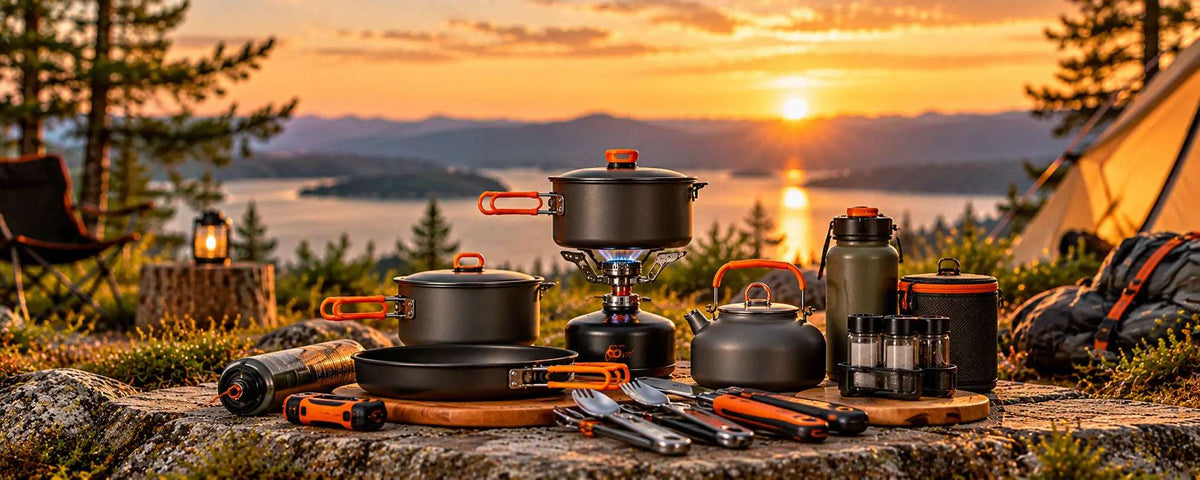
Shop 200+ Elevate your outdoor cooking experience with our premium selection of camping stoves and cookware. Whether you’re backpacking through rugged trails or setting up a cozy campsite, having the right gear makes all the difference. Explore durable, lightweight portable stoves, versatile...

Free Shipping
Worldwide delivery
Eco-Friendly
Sustainable materials
4,091 Reviews
4.7 / 5 rated
Filter

    Stoves and Cookware

    Stoves and Cookware for Campsite Cooking, Backpacking Meals, And Expedition Kitchens

    Trekker Essentials' Stoves and Cookware collection includes canister stoves (upright and remote), liquid-fuel stoves for high altitude and cold, wood-burning and biomass stoves, and more — chosen for real performance in Indian conditions — humid coastal cooking to high-altitude Ladakh boil times. Every product is selected for real-world performance on Indian trails and campsites, with full specifications published so you can compare on the details that matter, not marketing claims.

    What's inside this collection

    • Canister stoves (upright and remote)
    • Liquid-fuel stoves for high altitude and cold
    • Wood-burning and biomass stoves
    • Alcohol and solid-fuel stoves
    • Pots, pans, and complete mess kits
    • Cutlery, mugs, and food storage

    Who this collection is for

    This collection serves backpackers cooking for one, car campers cooking for a group, high-altitude trekkers, and overlanders. Whether you're planning a single overnight trip or a multi-week Himalayan expedition, the products here cover the full performance range at price points from entry-level to expedition-grade.

    How to shop this collection

    Filter by use-case, weight, or price to narrow the list. Every product page includes detailed specifications, a use-case rating, and honest notes on limitations. If you're new to buying stoves and cookware, start with the Buying Guide below — it walks through the specifications that actually matter and the trade-offs between price tiers.

    Why Shop Stoves and Cookware at Trekker Essentials

    • Field-tested selection — every camping stove and cookware in this collection is chosen and used by trekkers, not merchandisers
    • India-specific climate coverage — gear rated for Himalayan monsoons, Western Ghats humidity, coastal wind, and Ladakh cold
    • Full spec disclosure — weight, dimensions, ratings, and materials published on every product page
    • Multi-brand curation — compare across leading outdoor brands in one place with consistent spec formatting
    • Sizes for Indian users — apparel and pack sizes matched to Indian body types, not just US/EU standards
    • Fast, tracked shipping — dispatched within 48 hours across India, with real-time tracking and no-surprise duties
    • Easy 7-day returns — try the camping stove and cookware at home; return if the size or fit isn't right

    Camp Stoves & Cookware Buying Guide

    Good camp cooking starts with the right stove and cookware. Whether you are boiling water for morning coffee on a solo backpacking trip or preparing elaborate meals for a large group, the right cooking gear transforms the camp kitchen experience. This guide covers fuel types, stove designs, and cookware selection.

    Choosing the Right Camp Stove & Cookware

    • Fuel Type — Canister stoves (isobutane-propane) are convenient and lightweight. Liquid fuel stoves (white gas) work at altitude and in cold weather. Wood-burning stoves require no fuel to carry. Alcohol stoves are ultralight but slow. Choose fuel based on trip duration and conditions.
    • Stove Design — Canister stoves with integrated windscreen perform best in moderate conditions. Remote canister stoves work better in cold weather by keeping fuel warm. Backpacking integrated stove-pot systems (JetBoil, MSR Windburner) are fastest for boiling but less versatile for cooking.
    • Cookware Material — Titanium is lightest and most durable but expensive. Hard-anodized aluminum offers excellent heat distribution at lower cost. Stainless steel is durable and affordable but heavier. Non-stick coatings simplify cleanup but require careful handling.
    • Pot Size & Volume — Solo backpackers need only a 0.9-1.5L pot. Pairs use 1.5-2L. Groups of 4+ need 4-6L pots or multiple pieces. Nesting cook sets save space by storing components inside the largest pot.
    • BTU Output & Boil Time — Higher BTU ratings mean faster boil times. 10,000 BTU stoves boil 1L water in 3-4 minutes. For quick meal preparation, prioritize burner output over low simmer capability.

    Elevate your camp cooking with the right stove and cookware. Our collection spans ultralight backpacking systems to full camp kitchen setups for delicious meals wherever you set up camp.

    FAQ — Camp Stoves & Cookware

    What type of camp stove is best for backpacking?

    For most backpackers, a canister stove (isobutane-propane mix) offers the best balance of convenience, weight, and performance. Integrated systems like JetBoil or MSR Windburner are most efficient for boiling. For solo fast-packing, alcohol stoves minimize weight. For winter mountaineering, liquid fuel stoves outperform in extreme cold.

    How do I choose camping cookware material?

    Titanium is the premium choice for ultralight backpackers: lightest, strongest, and corrosion-proof. Hard-anodized aluminum provides better heat distribution for simmering and costs significantly less. Stainless steel is durable and inert (no metallic taste) but 3-4x heavier than titanium. For car camping, any material works fine.

    How long does one fuel canister last?

    A standard 100g isobutane canister provides approximately 1-2 hours of cooking time or 12-15 boils of 1 liter of water. Plan on one 100g canister per person per 3-4 day trip for simple boiling. Plan 2 canisters per person for cook-heavy trips with multiple daily meals. Carry one extra canister as backup on any multi-day trip.

    Can I use my camp stove inside a tent?

    Never cook inside a closed tent due to fire risk and carbon monoxide poisoning hazard. You may cook in a tent vestibule with doors fully open for emergency situations (extreme weather), but only with extreme caution, a CO monitor, and by keeping the flame well away from tent fabric. Cooking outside in a sheltered location is always safest.

    How do I clean camp cookware without soap in the backcountry?

    In leave-no-trace camping, clean pots by scraping out food residue, adding a small amount of water, heating briefly to loosen stuck bits, and scrubbing with a camp scrubber. Strain wash water and scatter it 200+ feet from water sources. For stubborn residue, a small amount of biodegradable camp soap used 200+ feet from water sources is acceptable.

    Customer Reviews

    What Our Customers Say

    4.7 4,091 reviews
    Secure Checkout
    SSL encrypted
    Free Shipping
    On orders over $75
    Easy Returns
    30-day policy
    Lifetime Gear Support
    Trail-tested & built to last